

Windows 11 stole the spotlight at CES 2026 as Microsoft and its partners showed how AI PCs, new silicon, and bold hardware designs are reshaping what a modern Windows laptop or desktop can do. From Copilot+ PCs and dual‑screen OLED designs to keyboard‑sized AI PCs and ultra‑powerful gaming rigs, this CES made it clear that Windows 11 is now the home for mainstream AI computing.
Windows 11 and Copilot+ PCs take center stage

CES has always been where PC makers show what’s next, but 2026 is the year AI PCs switched from buzzword to baseline across the Windows ecosystem. Microsoft is positioning Windows 11, especially on Copilot+ PCs, as the “agentic OS” where local NPUs and the cloud work together to power new AI‑driven workflows, creativity tools, and productivity features.
Across the show floor, OEM partners launched waves of new Windows 11 and Copilot+ systems built around next‑generation silicon from AMD, Intel, and Qualcomm, all tuned to run AI workloads on‑device for better performance, privacy, and battery life. For shoppers eyeing a new PC in 2026, this means more choice than ever in thin‑and‑light laptops, dual‑screen devices, creator rigs, and serious gaming machines that are all AI‑ready out of the box.
Standout Windows 11 devices at CES 2026
Microsoft’s blog highlights a long list of partner PCs, but a few designs clearly set the tone for where Windows hardware is going next. From Acer’s giant haptic touchpad to ASUS’ dual‑screen Zenbook DUO and HP’s AI PC in a keyboard, each OEM is trying to differentiate on AI performance, form factor, and display tech while staying tightly aligned with Windows 11 and Copilot+.
Hero devices and their focus
| Device / lineup | Key focus | Notable specs / claims | Platform |
|---|---|---|---|
| Acer Swift 16 AI | Thin‑and‑light AI laptop | World’s largest haptic touchpad, up to 120 Hz 3K OLED touch, 14.9 mm chassis | Intel Core Ultra Series 3, Copilot+ |
| Predator Helios Neo 16S AI | Gaming AI laptop | Up to NVIDIA GeForce RTX 5070 Laptop GPU in 18.9 mm metal chassis | Intel Core Ultra Series 3 |
| ASUS Zenbook DUO | Dual‑screen productivity | Two 14‑inch OLED touchscreens, 99 Wh battery, 50 TOPS NPU, detachable BT keyboard | Intel Core Ultra, Copilot+ |
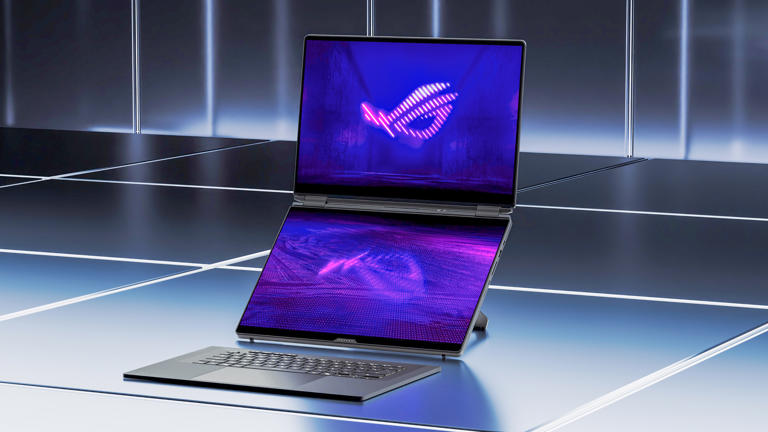
| ASUS ROG Zephyrus Duo | Dual‑screen OLED gaming | First 16‑inch dual‑screen OLED gaming laptop, up to RTX 5090 Laptop GPU | Intel Core Ultra Series 3, Copilot+ |
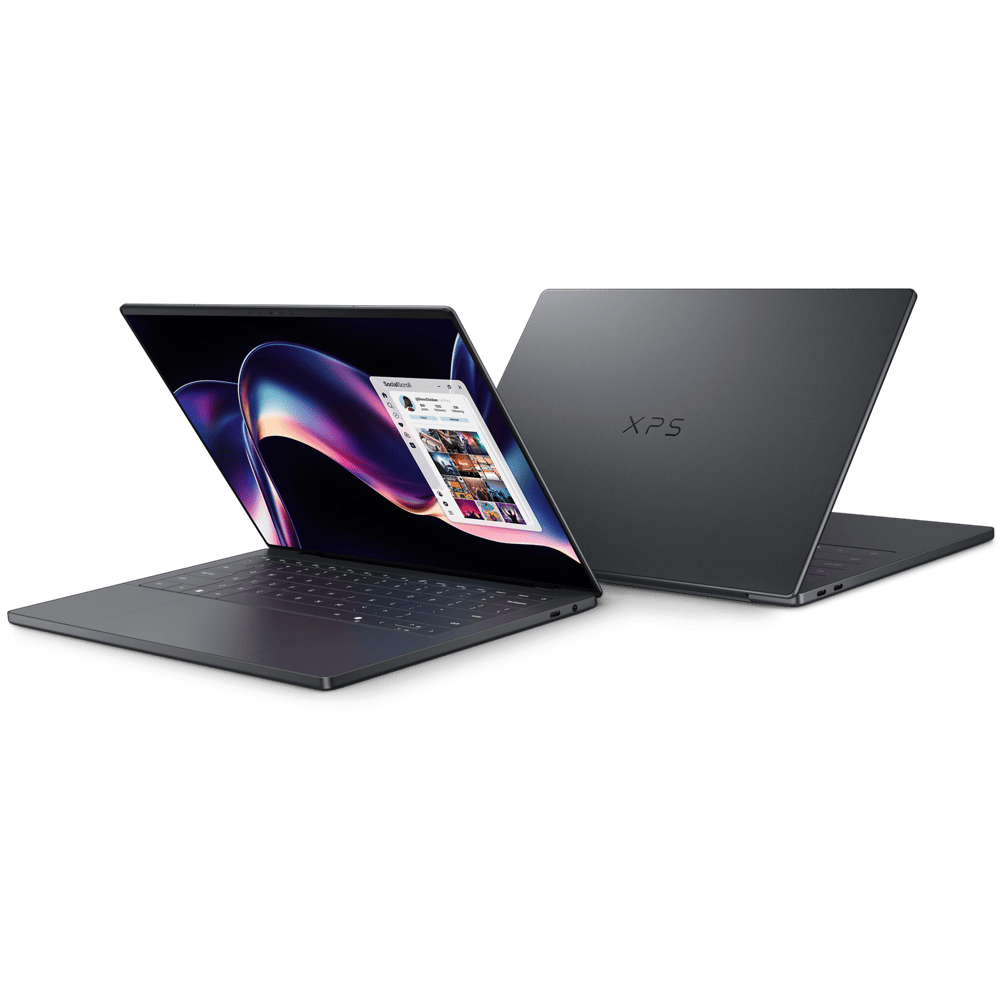
| Dell XPS 14 & 16 | Premium Windows flagships | Redesigned aluminum builds, long battery life; XPS 13 returning later in 2026 | Windows 11, latest Intel |
| HP EliteBook X G2 | AI work laptops | CES Innovation Award, Copilot+ for leaders and pros | AI‑focused Windows 11, NPUs |
| HP EliteBoard G1a | AI PC in a keyboard | “World’s first” full AI PC built into a keyboard chassis | Windows 11 AI PC, ≥40 TOPS NPU |
| HP OmniBook Ultra 14 | Mobile AI powerhouse | Snapdragon X2 Elite, up to 85 TOPS NPU for concurrent AI apps | Copilot+ PC, ARM‑based |
| Lenovo ThinkPad X1 Carbon Gen 14 Aura | Classic business ultrabook, evolved | Thinnest, lightest, most powerful X1 Carbon to date | Intel Core Ultra Series 3 |
| Samsung Galaxy Book6 Ultra | Premium AI creator laptop | Intel Core Ultra, RTX graphics, AMOLED display, Wi‑Fi 7, Knox security | Windows 11 AI‑ready |

ASUS is leaning hard into dual‑screen designs this year. The Zenbook DUO integrates two 14‑inch OLED touch displays with a detachable Bluetooth keyboard and kickstand, letting users flip between laptop, dual‑screen, desktop, and content‑sharing modes without extra accessories. Under the hood, an Intel Core Ultra CPU with a 50 TOPS NPU powers on‑device Copilot+ features like real‑time translation, AI content creation, and instant document summarization while aiming to preserve battery life and privacy.

For enthusiasts, the new ROG Zephyrus Duo becomes the first 16‑inch dual‑screen OLED gaming laptop, pushing RTX 5090 Laptop graphics and a 135W TGP into a CNC‑milled aluminum chassis. ASUS also built in five operation modes and a detachable magnetic keyboard so gamers and streamers can customize their setup on the go.
Dell used CES to refresh the XPS brand and extend Alienware deeper into AI‑ready gaming. The new XPS 14 and XPS 16 sport minimalist aluminum designs, bright high‑end displays, and are billed as the thinnest XPS laptops ever, with Dell planning to reintroduce the XPS 13 later in the year. On the gaming front, Alienware is adding anti‑glare OLED panels to its 16‑inch Area‑51 and Aurora 16X laptops, expanding AMD options on the Area‑51 desktop, and teasing both an ultra‑slim and an entry‑level gaming notebook.
Dell also had one of the most eye‑catching monitor announcements: a 52‑inch 6K UltraSharp Thunderbolt Hub display and a 32‑inch 4K QD‑OLED monitor tuned for color‑critical pros. Dell’s leadership positioned these devices as tools that, paired with Windows 11, help gamers, creators, and professionals “shatter expectations” rather than simply meet them.
HP, Lenovo, and Samsung push AI form factors further

HP’s CES 2026 story revolves around “future of work” PCs that blend AI acceleration, mobility, and new designs. The EliteBook X G2 Series Copilot+ PCs picked up CES Innovation Awards, and the EliteBoard G1a stands out as a full desktop‑class AI PC built entirely into a keyboard — including CPU, storage, memory, ports, and a ≥40 TOPS NPU for on‑device AI.
On the consumer side, the OmniBook line gets OLED options and more sizes, with the OmniBook Ultra 14 using Snapdragon X2 Elite to push up to 85 TOPS NPU performance for concurrent AI apps. For at‑home creators, the OmniStudio X 27 AIO pairs a next‑gen Intel Core Ultra 7 with a Neo:LED display that covers 100% Adobe RGB and 100% DCI‑P3, targeting creators who want both color accuracy and a clean desktop setup.
HP is also debuting the HyperX OMEN MAX 16 as the first gaming laptop in its new HyperX gaming ecosystem. HP claims it as the world’s most powerful gaming laptop with fully internal cooling, delivering up to 300 watts of total platform power using OMEN Tempest Cooling Pro without external cooling gear.

Lenovo’s CES lineup underscores its deep partnership with Microsoft, Intel, and AMD across business, creator, and gaming categories. New Copilot+ PCs like the ThinkPad X9 15p Aura Edition and the ThinkPad X1 Carbon Gen 14 Aura Edition bring Intel Core Ultra Series 3 to some of Lenovo’s most recognizable business platforms. Lenovo also showed off the ThinkBook Plus Gen 7 Auto Twist with a rotating hinge and the Yoga Pro 9i Aura Edition for creators, plus updated Legion gaming devices.

Samsung’s Galaxy Book6 family rounds out the premium Windows 11 AI story, offering Galaxy Book6, Book6 Pro, and Book6 Ultra with Intel Core Ultra processors and integrated NPUs. All three emphasize slim designs, AMOLED displays, strong battery life, and tight integration with the Galaxy ecosystem, while the Galaxy Book6 Ultra layers in NVIDIA GeForce RTX graphics for AI‑accelerated creative workloads. Wi‑Fi 7, enhanced cooling, and Samsung Knox security help position these laptops as secure, mobile‑first PCs for productivity and media creation.
Next‑gen AI silicon: AMD, Intel, Qualcomm
Underpinning all these Windows 11 devices is a new generation of silicon that treats AI as a first‑class workload alongside CPU and GPU tasks. AMD, Intel, and Qualcomm each used CES 2026 to pitch their latest platforms as the best foundation for Copilot+ PCs and Windows AI experiences.
AMD’s new Ryzen AI 400 Mobile Series brings high‑end Copilot+ performance to gaming, creation, and productivity laptops with dedicated NPUs tuned for on‑device AI tasks. The company is also expanding its Ryzen AI Max 300 Series for AI developers and workstation‑class users, and adding Ryzen 9000 desktop parts aimed at gamers and creators who want both high frame rates and AI acceleration. AMD leadership framed this as a “full‑stack” approach, where high‑performance compute, AI, graphics, and software work together to make PCs smarter and more efficient across all segments.
Intel introduced Intel Core Ultra Series 3, the first compute platform built on its 18A process, which it calls the most advanced semiconductor node manufactured in the US. These chips upgrade CPU performance, integrated graphics, and AI compute while focusing heavily on power efficiency, and they will appear in more than 200 designs from global OEM partners, with systems starting to ship globally from January 27. Intel’s message is about breadth: Core Ultra Series 3 is meant to be the most widely deployed AI PC platform in the Windows ecosystem, spanning consumer, business, and edge devices.
Qualcomm is expanding its Windows PC push with the Snapdragon X2 Plus, complementing existing X2 Elite and X2 Elite Extreme parts. The X2 Plus targets Copilot+ PCs across more form factors, delivering an 80 TOPS NPU for rich AI experiences alongside strong power efficiency and long battery life. Qualcomm claims X2 Elite in particular delivers “legendary leaps” in performance, AI processing, and battery life as OEMs bring thinner, lighter ARM‑based Windows laptops to market.
What this means for Windows users in 2026
The big takeaway from Microsoft’s CES 2026 recap is that Windows 11 PCs are rapidly standardizing around AI‑first design, from on‑device NPUs to new form factors that assume AI‑assisted workflows. Whether you are a remote worker, content creator, gamer, or IT decision‑maker planning your next refresh, there is now a wide spectrum of Copilot+ and AI‑ready devices tuned to very specific use cases.
Microsoft emphasizes that this momentum is the result of deep, long‑term collaboration across OEMs and silicon partners, with Windows providing the open platform and Copilot+ experiences that tie it all together. With Windows 11 continuing to add new AI features and 2026 shaping up as a major PC refresh cycle, there has rarely been a better time to look at upgrading to a modern Windows 11 AI PC that matches how you work, play, and create.
Discover more from Microsoft News Now
Subscribe to get the latest posts sent to your email.
