
Microsoft is kicking off the Sentinel March 2026 update with a big wave of updates and fixes aimed squarely at SOC teams who are trying to do more with less. The theme this month is clear: use AI and automation to cut out complexity, speed up detection and response, and extend coverage across hybrid and multicloud environments. From natural-language automation to real-time data ingestion and Kubernetes visibility on Google Cloud, this release pushes Sentinel further into “agentic” SIEM territory.
At a high level, the March drop introduces four major pillars: a natural-language playbook generator for flexible SOAR workflows, CCF Push for seamless real-time data streaming into Sentinel, a dedicated Google Kubernetes Engine (GKE) connector, and new hybrid identity scenarios powered by RSA ID Plus and Security Copilot. On top of that, Microsoft is using RSA Conference 2026 to showcase where it’s taking Sentinel and its broader security platform next, including guidance for security leaders who are actively re-evaluating their SIEM investments for the AI era.
According to the latest “What’s New in Microsoft Sentinel: March 2026” update, these capabilities are designed to help SOCs automate faster, onboard data with less friction, and detect threats across a wider footprint without piling on operational overhead. The post also ties the product roadmap to a larger story: how AI, autonomous agents, and unified data foundations are reshaping security operations and SIEM strategy overall.
Natural-language playbook generator brings AI into SOAR design
The headline feature this month is the Microsoft Sentinel playbook generator, which brings natural-language design to SOC automation. Instead of manually wiring together static templates or limited connector libraries, security teams can describe the workflow they want in plain language, and Sentinel generates a fully functional Python playbook with documentation and a visual flowchart. That means analysts can go from “idea” to “automation” much faster, without needing to hand-code from scratch. Check out this video of the Microsoft Sentinel Playbook Generator in action below.
Crucially, the generator is built to work across Microsoft and third‑party tools. By defining an Integration Profile with a base URL, authentication method, and credentials, you can have Sentinel create dynamic API calls even if there isn’t a prebuilt connector. That opens the door to automating notifications, ticket updates, enrichment steps, and incident response actions across your entire stack. Once generated, teams can validate playbooks against real alerts, refine them via chat or manual edits, and still keep full transparency and control over the underlying code.
CCF Push unlocks real-time security data streaming (public preview)
On the data side, the new Codeless Connector Framework (CCF) Push feature focuses on shrinking the gap between where security telemetry lives and where analysts actually work. Instead of having to configure Data Collection Endpoints, Data Collection Rules, Entra app registrations, and RBAC assignments step by step, CCF Push lets you hit “Deploy” and have Sentinel set up the necessary resources for you automatically.
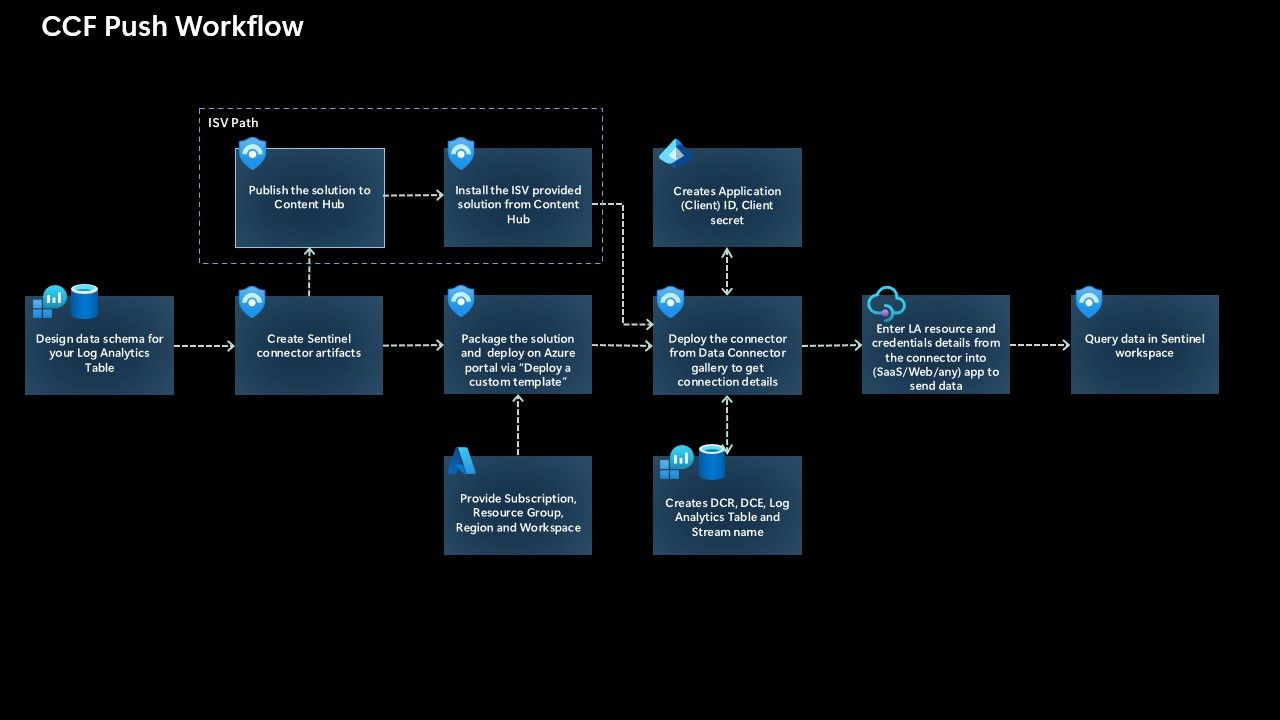
Because it’s built on the Log Ingestion API, CCF Push supports high‑throughput streaming and lets you transform data before it lands in Sentinel. Security teams can deliver logs straight into system tables to speed up detection and response, or build more advanced scenarios like data lake integrations and AI‑driven analytics. Microsoft notes that solution developers can start using CCF Push immediately, and partners including Keeper Security, Obsidian Security, and Varonis are already streaming security data into Sentinel this way.
Dedicated GKE connector brings Google Cloud Kubernetes into view
For organizations running Kubernetes in multiple clouds, Sentinel is adding a dedicated data connector for Google Kubernetes Engine (GKE), now generally available in the Sentinel content hub. The connector pulls in GKE cluster activity, workload behavior, and security events into a GKEAudit table, mirroring how Azure Kubernetes Service (AKS) clusters are monitored today.
The connector includes support for Data Collection Rules, data lake‑only ingestion, and workspace transformations so teams can filter or reshape data before it reaches its final destination. The bigger win is operational: SOC teams can now apply Sentinel analytics rules, workbooks, and hunting queries across GKE signals alongside the rest of their environment. That gives defenders a more consistent view of Kubernetes threats whether clusters are running on Azure or Google Cloud.
Hybrid identity gets an agentic boost with RSA and Security Copilot
Identity remains one of the most valuable—and most abused—attack surfaces, and Microsoft is highlighting a new hybrid identity scenario built with RSA. RSA has developed an agentic solution that blends RSA ID Plus telemetry with Sentinel’s data lake and Security Copilot agents. Administrative identity telemetry from RSA ID Plus is ingested into the Sentinel data lake for cost‑effective, long‑term retention, and then Security Copilot agents continuously analyze that data.
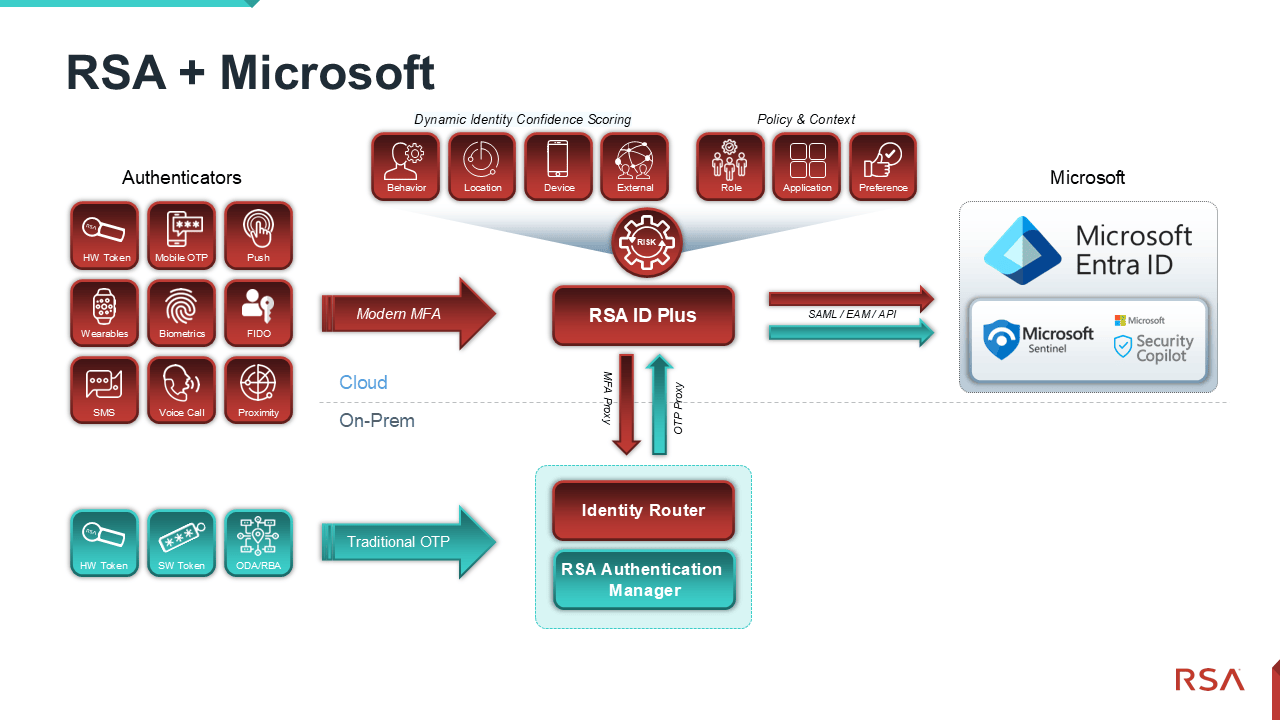
For SOC teams, this means risky or anomalous admin behavior can be surfaced automatically, without having to manually correlate identity events with broader Sentinel telemetry. Because admin accounts are such high‑value targets, having agentic AI watch for compromised credentials and unusual patterns can help reduce investigation time and catch issues earlier in the kill chain.
Microsoft leans into RSAC 2026 and the “agentic SIEM” story
Microsoft is also using March to set the stage for RSA Conference 2026 in San Francisco. Security leaders heading to RSAC are being invited to “Microsoft Security Pre‑Day” on March 22 at the Palace Hotel, where CVP Vasu Jakkal and other leaders will talk about how AI and autonomous agents are reshaping defense strategies. Sessions will cover the future of security operations, threat intelligence trends, and the newest areas of security R&D.
To help buyers translate all of this into concrete platform decisions, Microsoft is promoting its Strategic SIEM Buyer’s Guide. The guide frames what a modern SIEM should deliver around three pillars: building a unified, future‑ready foundation, accelerating detection and response with AI, and maximizing ROI through faster time‑to‑value. Microsoft highlights outcomes from Sentinel customers, including a 44% reduction in total cost of ownership and 93% faster deployment times compared to legacy on‑prem SIEMs, as proof points for that agentic platform story.
Microsoft Sentinel March 2026 update and what SOC leaders should do next
Alongside the product updates, Microsoft is pushing a slate of security events for March and early April. These include Microsoft Security Day in Mumbai on March 11, a tech brief on next‑generation security operations on March 18, an in‑person Security Immersion “Shadow Hunter” event in Toronto on March 19, and Microsoft’s broader presence at RSAC 2026 in San Francisco from March 23–26. There is also a March 25 tech brief on modernizing security operations with a unified platform and an April 2 session focused on mastering SecOps in the AI era while kickstarting SC‑200 certification prep.
For SOC leaders, the March 2026 Sentinel release is a clear signal: Microsoft is doubling down on AI‑assisted automation, real‑time data, and multicloud visibility while giving security and procurement teams a framework to evaluate SIEM platforms for the agentic era. If you are running Sentinel today, this is the month to pilot natural‑language playbook generation and CCF Push with a couple of high‑value data sources. If you are still on a legacy SIEM, these updates—and the associated buyer’s guide—give you fresh material to benchmark whether your current platform can keep up with how quickly AI is redefining security operations.
Recent Posts You May Like
- Microsoft Defender Monthly News (March 2026): New Sentinel UEBA, Copilot Guidebooks, and XDR Upgrades
- March 2026 Microsoft 365 Changes: The Definitive Guide for IT Pros and SMB Admins
- Microsoft’s Copilot App on Windows Now Seamlessly Opens Web Links Side-by-Side for Windows Insiders
- Microsoft’s February 2026 Copilot Chat Roadmap Turbocharges One‑Click Email Summaries and Faster, Higher‑Quality Images
- What’s New in Microsoft Sentinel February 2026: Improved Connectors, Multi‑Tenant Content, and More
Discover more from Microsoft News Now
Subscribe to get the latest posts sent to your email.
