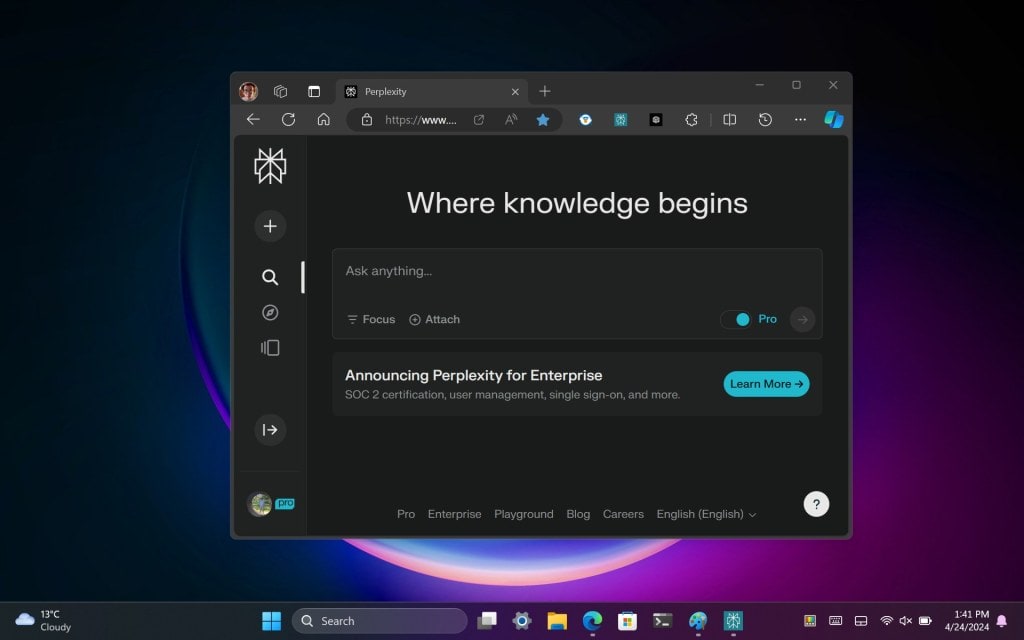

In a surprising move, Microsoft has decided to block its employees from accessing Perplexity AI, a significant player in the AI-driven search engine market and one of the largest customers of Microsoft’s Azure OpenAI service. As reported by Business Insider, this decision raises several questions about the reasons behind the block, its impact on Microsoft employees, public reaction, and the legal implications of such a move.
Reasons for blocking access to Perplexity AI

Microsoft has not publicly disclosed the specific reasons for blocking access to Perplexity AI. However, it is known that Perplexity AI, which offers a conversational AI chatbot search engine, relies significantly on Microsoft’s Azure OpenAI service. This service is also used by major corporations like Walmart and JPMorgan Chase for integrating generative AI into their business processes. The blockage could be seen as a protective measure, ensuring that Microsoft’s intellectual property or competitive advantages are not inadvertently compromised through extensive employee interaction with a direct competitor’s tools.
Impact on Microsoft employees

The decision to block access to Perplexity AI could have various impacts on Microsoft employees. Firstly, it limits their ability to engage with and learn from one of the market’s leading AI-driven search engines, potentially stifling innovation and personal development within Microsoft’s workforce. Employees who might have been using Perplexity AI for enhancing their productivity or for research purposes are now forced to look for alternatives within Microsoft’s Copilot ecosystem or other approved tools.
Public reaction
The public reaction to Microsoft’s decision has been mixed. On one hand, industry observers and tech enthusiasts might view this as a typical competitive safeguard common among tech giants. On the other hand, it could be perceived as Microsoft limiting its employees’ freedom to explore and utilize the best tools available in the AI space, which could reflect poorly on the company’s commitment to open innovation.
Legal implications
The legal implications of Microsoft’s decision to block access to Perplexity AI are not immediately clear but could be significant. This move might draw scrutiny regarding anti-competitive practices, especially given that Perplexity AI is a significant customer of Microsoft’s Azure services. Furthermore, as generative AI technology continues to be a hotbed for legal debates, particularly around data usage and intellectual property rights, Microsoft’s decision could set precedents for how tech companies manage access to competing AI tools.
Microsoft’s decision to block employee access to Perplexity AI underscores the complex interplay between maintaining competitive advantage and fostering an open, innovative work environment. While the company may have valid reasons related to protecting its intellectual property and competitive stance, the move could have unintended consequences on employee morale and public perception. Moreover, it raises important legal questions that could influence future policies on employee access to external tools in the rapidly evolving tech landscape.
Discover more from Microsoft News Now
Subscribe to get the latest posts sent to your email.
