

Microsoft is coming into MWC 2026 with a clear message for telecom operators: AI is finally ready to move from flashy pilots to real “return on intelligence.” The company is rolling out new Azure Local capabilities, sovereign edge infrastructure, and partner‑driven AI blueprints to help telcos actually monetize AI across networks, operations, and customer experiences.
A single platform for telecom AI and data
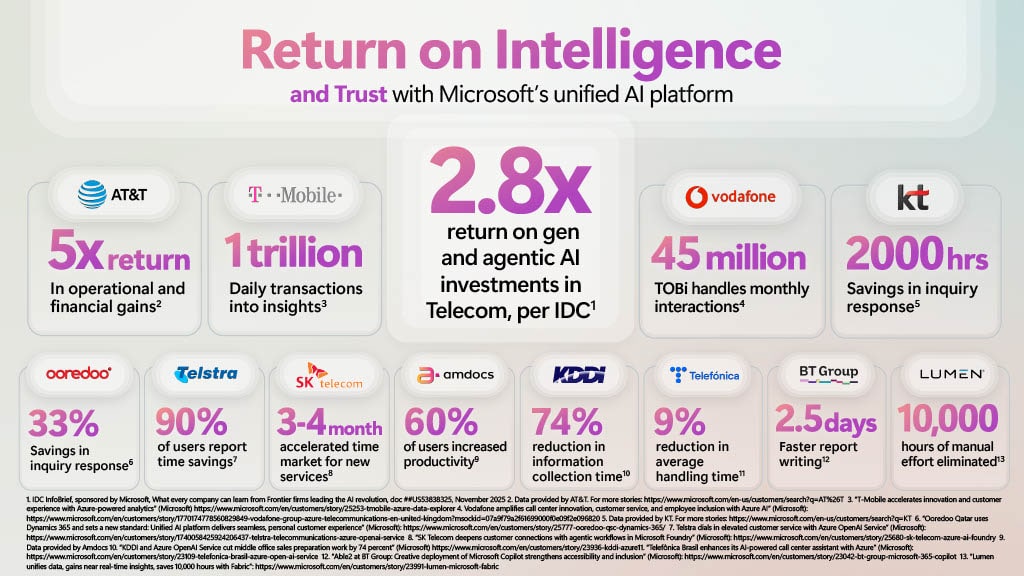
At the heart of Microsoft’s pitch is a single platform that fuses AI, unified data, trust, and governance so operators can build connected, actionable insights instead of siloed AI experiments. This “intelligence layer” is designed to accelerate day‑to‑day decisions, automate network operations, improve customer experiences, and unlock new revenue through AI‑powered services.
To build trust, Microsoft is leaning on a carrier‑grade control plane that provides built‑in monitoring and governance across the entire AI platform, including AI agents from partners. The idea is to let telecoms innovate with agentic AI while still meeting regulatory, security, and compliance requirements.
Sovereign, AI‑ready edge for regulated networks
A big part of the MWC 2026 news is all about the edge and sovereignty. Microsoft is advancing its Sovereign Cloud with fully disconnected operations, pushing cloud capabilities and AI‑ready infrastructure deeper into operator networks than before.
This matters because telecoms increasingly have to support low‑latency services, real‑time processing, and strict data sovereignty guarantees, especially for regulated industries and mission‑critical scenarios. By extending sovereign edge infrastructure into those environments, operators can keep sensitive data local, maintain operational resilience, and still tap into the broader Azure ecosystem.
In practice, this means Microsoft is collaborating with telecom operators to build sovereign cloud platforms and managed services that marry hyperscale innovation with local control. The goal is to give enterprises a way to satisfy residency and regulatory obligations while still accelerating digital and AI transformation with a familiar Microsoft stack.
Azure Local grows up with multi‑rack deployments
Another headline is the expansion of Azure Local, Microsoft’s on‑premises Azure footprint, to support multi‑rack deployments. Up to now, many Azure Local deployments have focused on single‑node or small cluster footprints, but telecom workloads often need much larger, highly available configurations.
The new multi‑rack support is designed for:
-
High availability and fault isolation across racks.
-
Simpler operations at scale for mission‑critical workloads.
-
A path for operators to scale from smaller clusters to full multi‑rack environments as AI demand grows.
Multi‑rack deployment capabilities are currently in preview and are expected to become available in the coming months. That timeline gives operators some room to test architectures while still aligning with multi‑year 5G and fiber investment cycles.
From promise to production: real AI architectures
Microsoft isn’t just talking about AI in abstract terms; it’s promoting a reference architecture that telecoms can use to move from experiments to production for MWC 2026. The blueprint combines an AI‑ready data foundation, agentic AI patterns, and end‑to‑end governance so operators can scale new use cases without reinventing the wheel each time.
A key theme is “digital completion” and faster resolution across customer journeys. By orchestrating AI agents that span sales, service, and network operations, Microsoft argues that telecoms can reduce cost‑to‑serve and create a new monetization layer built around AI services. That includes the concept of federated AI marketplaces with built‑in identity, billing, and sovereign deployment options for partner solutions.
Data foundation: Azure, Fabric, and Databricks
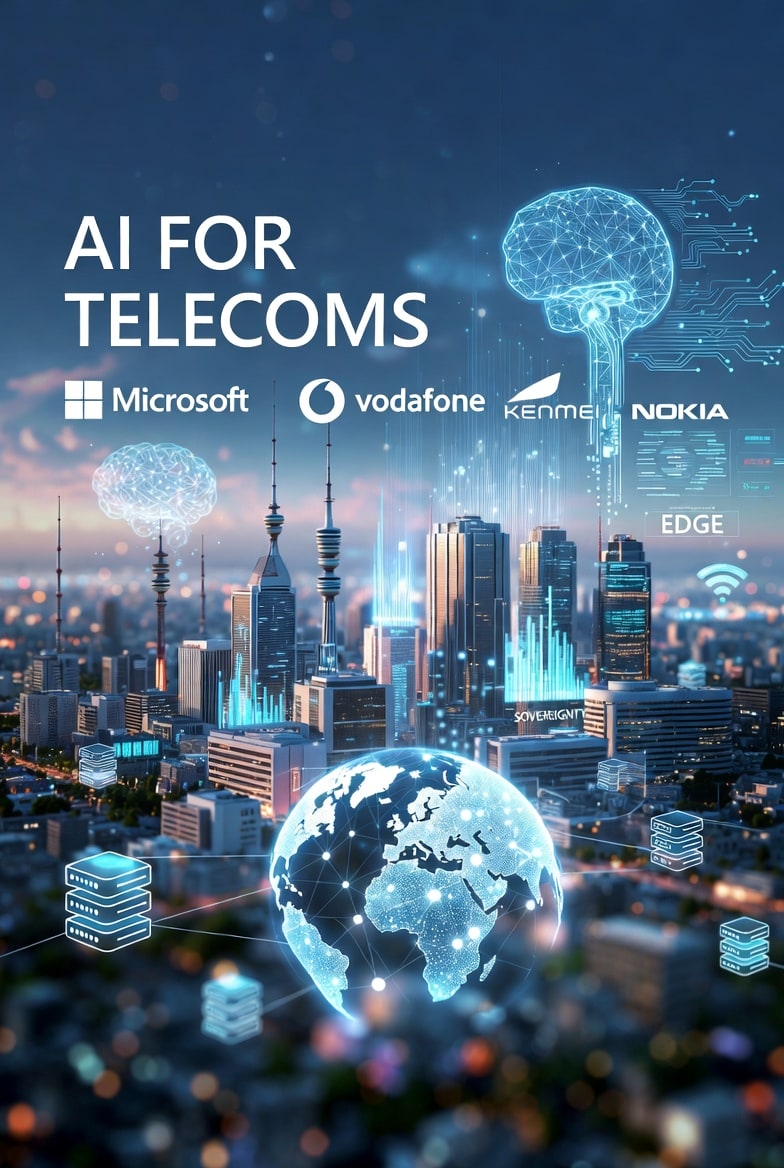
Under the hood, the telecom AI story leans heavily on Azure data services and Microsoft Fabric. Microsoft is extending online transaction processing capabilities into the Databricks Data Intelligence Platform on Azure to close the gap between operational systems and the lakehouse. That promises better performance and lower total cost of ownership for data‑intensive AI pipelines.
Partners are already building on this foundation:
-
Nokia is integrating its data suite with Microsoft Fabric to securely unify network telemetry and reportedly cut AI use case development time by up to 80 percent.
-
This kind of streamlined telemetry pipeline is critical for AI models that need fresh, high‑volume network data to make meaningful recommendations or trigger automated actions.
By putting Fabric at the center, Microsoft is positioning itself as the default analytics and AI layer for operators that are already standardizing on Azure.
Real‑world example: Vodafone’s autonomous network operations
To prove that this isn’t just slideware, Microsoft is highlighting its work with Vodafone on autonomous transport network operations. The blueprint is built on Microsoft’s own experience using autonomous agents across its global Azure transport network.
Microsoft says AI agents now:
-
Continuously monitor performance across the Azure transport network.
-
Identify root causes of issues and manage over 65 percent of fiber‑break field dispatches autonomously.
-
Improve time to repair by up to 25 percent and accelerate root‑cause analysis by about 80 percent.
By applying these same capabilities to Vodafone’s transport network, the two companies are working to shift telecom operations toward more intelligent, automated workflows that reduce manual work and increase resilience.
Vodafone’s leadership frames the collaboration as combining deep network expertise with Microsoft’s proven AI‑powered operations to build faster, more resilient connectivity networks. It’s a strong proof point for other operators who want to see AI running at carrier scale, not just in lab demos.
Kenmei and agentic AI for autonomous networks
Another partner story at MWC 2026 comes from Kenmei, which is teaming up with Microsoft to help operators accelerate their path toward autonomous networks. Kenmei is combining its telecom intelligence platform with Azure and Microsoft Fabric to enable scalable analytics and agentic AI‑powered operations.
These solutions are already in use at operators such as Telefónica and Etisalat (e&), where they help reduce manual effort, speed up decision‑making, and push more network processes toward automation. For Microsoft, it’s another example of how an AI‑ready data foundation plus agentic AI patterns can be reused across different operators and regions.
What this means for Microsoft and telecoms
For Microsoft, the MWC 2026 announcements reinforce its strategy to be the AI and data platform layer for the telecom industry, from edge hardware to cloud analytics. By extending Sovereign Cloud to fully disconnected operations and scaling Azure Local to multi‑rack deployments, it is building infrastructure that can live inside operator networks and meet strict regulatory requirements.
For telecoms, the takeaway is that AI at scale is going to look more like a platform and less like a set of one‑off pilots. With carrier‑grade governance, sovereign edge, and partner blueprints from companies like Nokia, Vodafone, and Kenmei, Microsoft is trying to give operators a faster route to real “return on intelligence” rather than yet another round of AI proofs of concept.
If you’re attending MWC 2026, Microsoft is promising live demos, customer stories, and deeper dives into how operators are moving from AI promise to AI in production across networks, operations, and customer channels.
Recent Posts You Might Like
- Windows 11 KB5077239: What’s New in the February 24, 2026 Preview Update
- Win a Super‑Charged Forza Horizon 6 Japanese Adventure with Sung Kang
- Microsoft Sovereign Cloud Can Now Run Big AI Models Fully Disconnected — Here’s Why It Matters
- Microsoft Fabric’s Native Execution Engine Supercharges Apache Spark with Up to 6x Faster Performance
- Japan Raids Microsoft Japan Over Massive Alleged Azure Anti‑Monopoly Violations
Discover more from Microsoft News Now
Subscribe to get the latest posts sent to your email.
