

SharePoint just turned 25, and Microsoft is using the anniversary to make a clear statement: this is no longer just your intranet or document library—it is the knowledge engine behind Microsoft 365 AI. The platform now serves more than 1 billion users each year, with over 2 billion files uploaded and 2 million SharePoint sites created every day, making it one of the largest enterprise content platforms on the planet.
In a new Microsoft 365 blog post, Jeff Teper, President for Collaborative Apps and Platforms, positions SharePoint as the number one grounding source for Microsoft 365 Copilot and a core pillar of Microsoft’s Work IQ intelligence layer. The message is simple: if you want Copilot and agents to truly understand your business, your SharePoint content needs to be well‑structured, governed, and ready for AI.
SharePoint: From intranet to AI foundation
Microsoft says SharePoint is now “indispensable” for making AI useful at work because it provides the structured knowledge Copilot needs to answer questions with real organizational context, not generic web data. Work IQ, the intelligence layer behind Microsoft 365 Copilot and agents, uses SharePoint alongside other signals to understand users, roles, and projects, so the AI can tailor its responses to each organization.
Enterprise customers like Takeda, Amey, Mars, and Hertz are already building AI strategies around SharePoint’s content and governance capabilities. Instead of treating knowledge as static documents, they are using SharePoint to “activate” that content so it can fuel Copilot, agents, and automated workflows across Microsoft 365.
Build: Agentic solutions from natural language
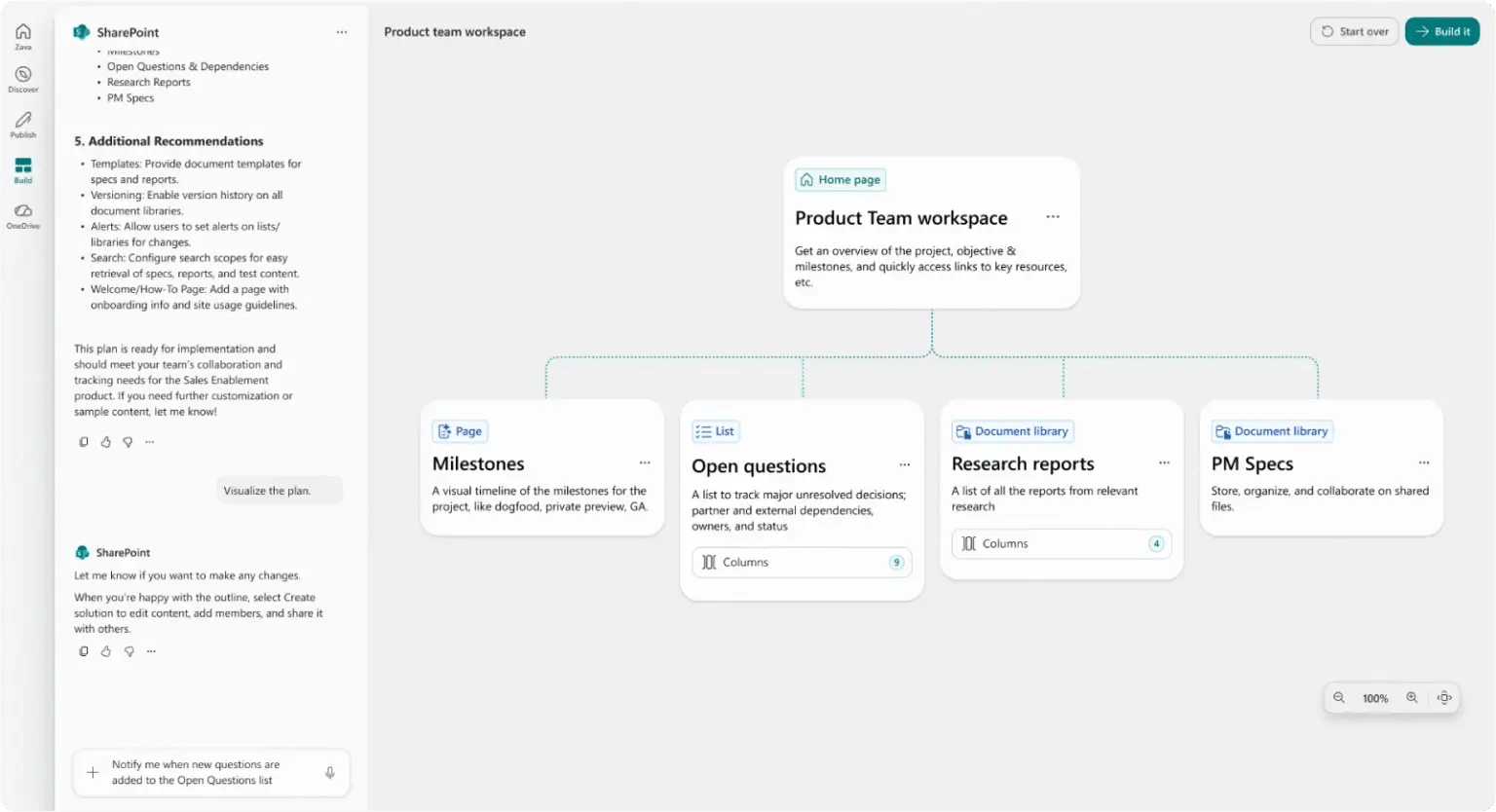
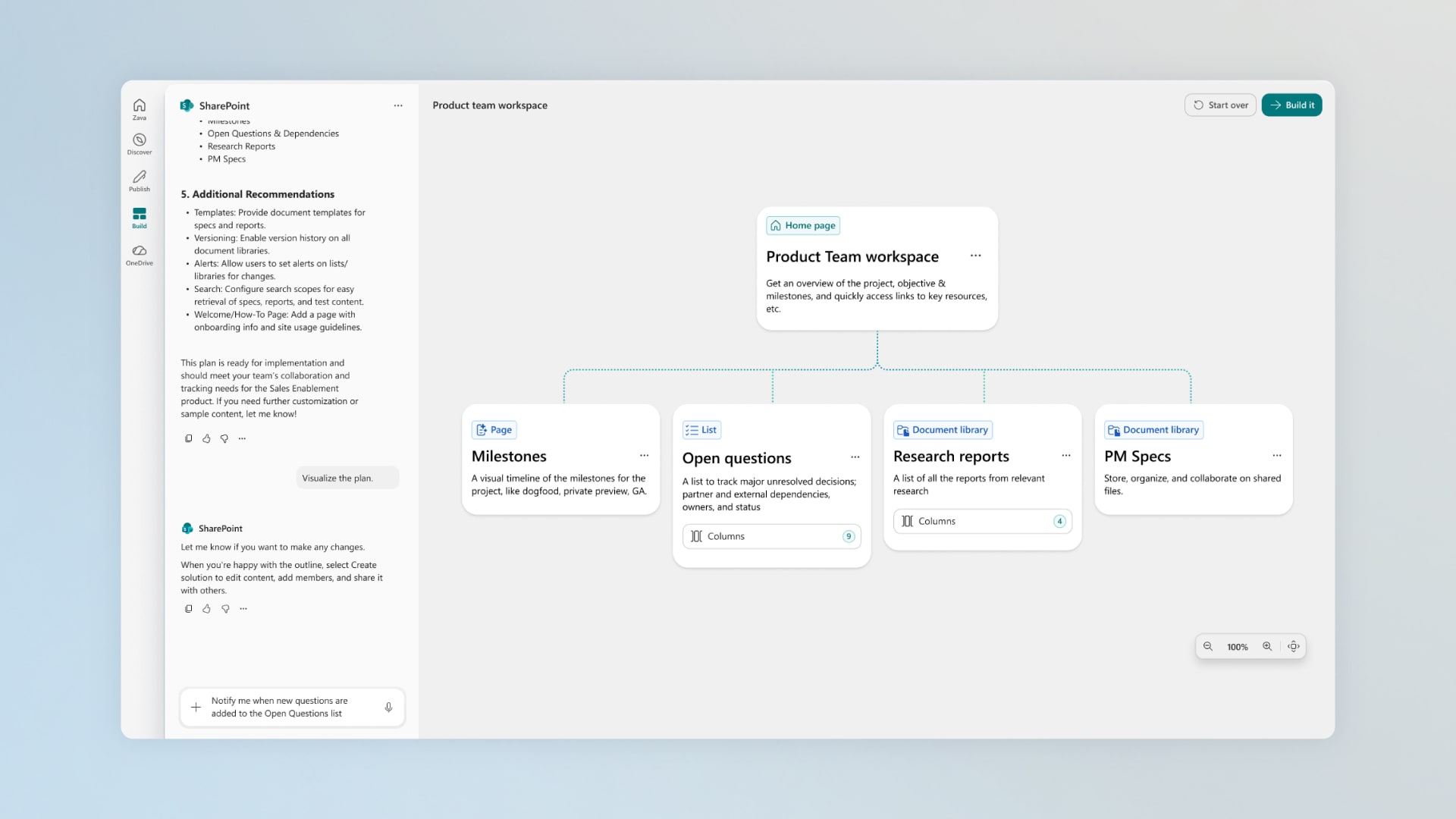
One of the biggest updates in this new chapter is the push toward “agentic” building experiences in SharePoint. Rather than starting from blank sites and lists, teams can describe their intent in natural language—such as “create a procurement contract repository” or “build an IT helpdesk portal”—and then work with AI to design and refine a real solution.
These experiences are designed to be multi‑step and collaborative, letting AI assist with:
-
Structuring lists, libraries, and content types
-
Applying governance and permissions
-
Wiring up processes for scenarios like contracts, IT support, or marketing content hubs
All of this happens inside the trusted Microsoft 365 environment, keeping security, compliance, and lifecycle management intact. Microsoft is also introducing “custom AI skills,” which are packages of organizational standards, terminology, governance rules, and business logic that shape how AI behaves for each tenant. That means Copilot and agents can be tuned to your risk thresholds, naming conventions, and approval rules rather than acting like a generic model.
Publish: AI‑assisted intranet and web content
SharePoint’s long‑time role as the intranet backbone is also getting a deep AI upgrade. Microsoft has redesigned the web publishing system so AI is embedded across the entire authoring process—from planning and drafting to refining and measuring impact.

According to Microsoft, SharePoint’s AI understands page components and web content structure, allowing it to:
-
Help authors outline and draft leadership communications and news posts
-
Suggest edits, summaries, and tone changes on the fly
-
Keep pages aligned with branding, accessibility, and governance standards
-
Assist in choosing appropriate backend models for specific publishing tasks
The goal is to help communications teams publish critical knowledge faster, while still maintaining centralized control and consistency across intranet sites.
Discover: Knowledge surfaces where people work

Microsoft is also reshaping how users discover knowledge. Instead of relying solely on search boxes, SharePoint content now powers a semantic foundation that Copilot and agents tap into across Microsoft 365, including Teams and Copilot Chat.
Microsoft has invested in a deep semantic index and retrieval‑augmented generation (RAG) architecture for SharePoint content, claiming Copilot has a more complete understanding of SharePoint than any simple connector could provide. That enables Work IQ scenarios where AI can:
-
Proactively surface relevant documents in chats and meetings
-
Connect related content from different sites and libraries
-
Deliver answers grounded in an organization’s own work rather than external data
Microsoft describes this as “proactive discovery”: Copilot brings the right file or page to you in context, instead of forcing users to hunt through site hierarchies.
Why this matters for Microsoft 365 customers
Teper closes by emphasizing that SharePoint has always been built with customers and partners, and that this collaboration is even more important in the AI era. For organizations, the takeaway is clear: if you want to get the most out of Copilot and Microsoft’s growing agent ecosystem, you need to treat SharePoint as a strategic knowledge platform, not just a file share.
Microsoft is directing customers to a companion Tech Community post with demos of the new agentic experiences and more technical details on how SharePoint, Copilot, and Work IQ fit together. Expect SharePoint to show up in more AI discussions going forward—not as the star of the show, but as the quietly essential backbone that makes Microsoft 365’s AI feel like it actually knows your business.
Recent Posts You Might Like
- March 2026 Microsoft 365 Changes: The Definitive Guide for IT Pros and SMB Admins
- The Comprehensive Microsoft 365 Copilot February 2026 update makes AI truly everyday-ready
- New Microsoft 365 OAuth Hijacking Campaign Dangerously Bypasses MFA: What Admins Must Do Now
- Biggest and Best Releases This Week on Xbox (March 2–6): Kingdom Come: Deliverance 2, Planet of Lana 2, Marathon, and More
Discover more from Microsoft News Now
Subscribe to get the latest posts sent to your email.
