
Two iconic brands – Levi Strauss & Co. and Microsoft – revealed an ambitious partnership aimed squarely at the future of retail. Combining Levi’s legendary denim heritage with Microsoft’s cloud and AI innovation muscle, the collaboration targets nearly every aspect of the Levi’s digital transformation journey. The centerpiece? Building an AI-powered “superagent” platform fueled by Microsoft’s latest technologies to weave data-driven workflows across the entire enterprise — from headquarters, to stores, to the warehouse floor.
AI Comes to Levi’s: Details of the Multi-Layered Architecture

Levi Strauss is all-in on Microsoft 365 Copilot, Copilot Studio, Azure AI Foundry, and what’s being called “agentic AI orchestration.” Here’s how these components fit together:
-
Microsoft 365 Copilot and Copilot Studio: These tools empower Levi’s staff—both in headquarters and retail locations—to ask natural language questions about everything from inventory to logistics. The answers come back instantly, powered by behind-the-scenes AI agents that tap into rich corporate and retail data.
-
Azure AI Foundry: This suite gives Levi’s developers and data teams everything they need to build, customize, and securely deploy enterprise-grade AI solutions. It’s not just about chatbots; it’s about orchestrating complex automation for business processes, security, monitoring, and predictive analytics.
-
Agentic AI and Orchestrator Agent: This new breed of AI—deployed natively in Microsoft Teams—routes employee requests to specialized “subagents,” which tackle everything from order processing to supply chain questions. Users experience all of this through a single conversational interface, creating what Levi’s and Microsoft call a “superagent” for their entire business.
This system aims for real-time productivity gains, scalable innovation, and fast, secure evolution as Levi Strauss moves further toward a direct-to-consumer-first model.
Surface Copilot+ PCs and Windows 11: The Hardware Backbone
Modern hardware plays a key role in this transformation. Levi’s employees across the company are switching to Microsoft Surface Copilot+ PCs running Windows 11. These new devices, introduced by Microsoft earlier this year, are built for high-performance AI workloads, real-time collaboration, and seamless integration with Microsoft 365 and Azure tools. Employee feedback is already overwhelmingly positive—staff report faster speeds, improved reliability, and a “Copilot key” that dramatically reduces time spent searching for information and lets them focus on innovation and creativity.
GitHub Copilot Accelerates Development
Levi Strauss isn’t only banking on productivity for front-line staff. The company’s developer teams are using GitHub Copilot, Microsoft’s generative AI for code, to accelerate work on critical internal projects like quality engineering, observability, and release management. As the platform rolls out, GitHub Copilot helps Levi’s engineers solve problems faster, keep projects on track, and pioneer new retail experiences.
Device Management and Security with Microsoft Intune
Security and efficiency are top priorities as Levi’s transitions its IT infrastructure to Microsoft solutions. Microsoft Intune enables zero-touch onboarding and streamlined application deployment company-wide, giving the IT team better control and using Azure’s cloud to consolidate private datacenters, cut costs, and enforce zero-trust security everywhere — from global offices to flagship stores.
The “Superagent” Transforming Every Experience
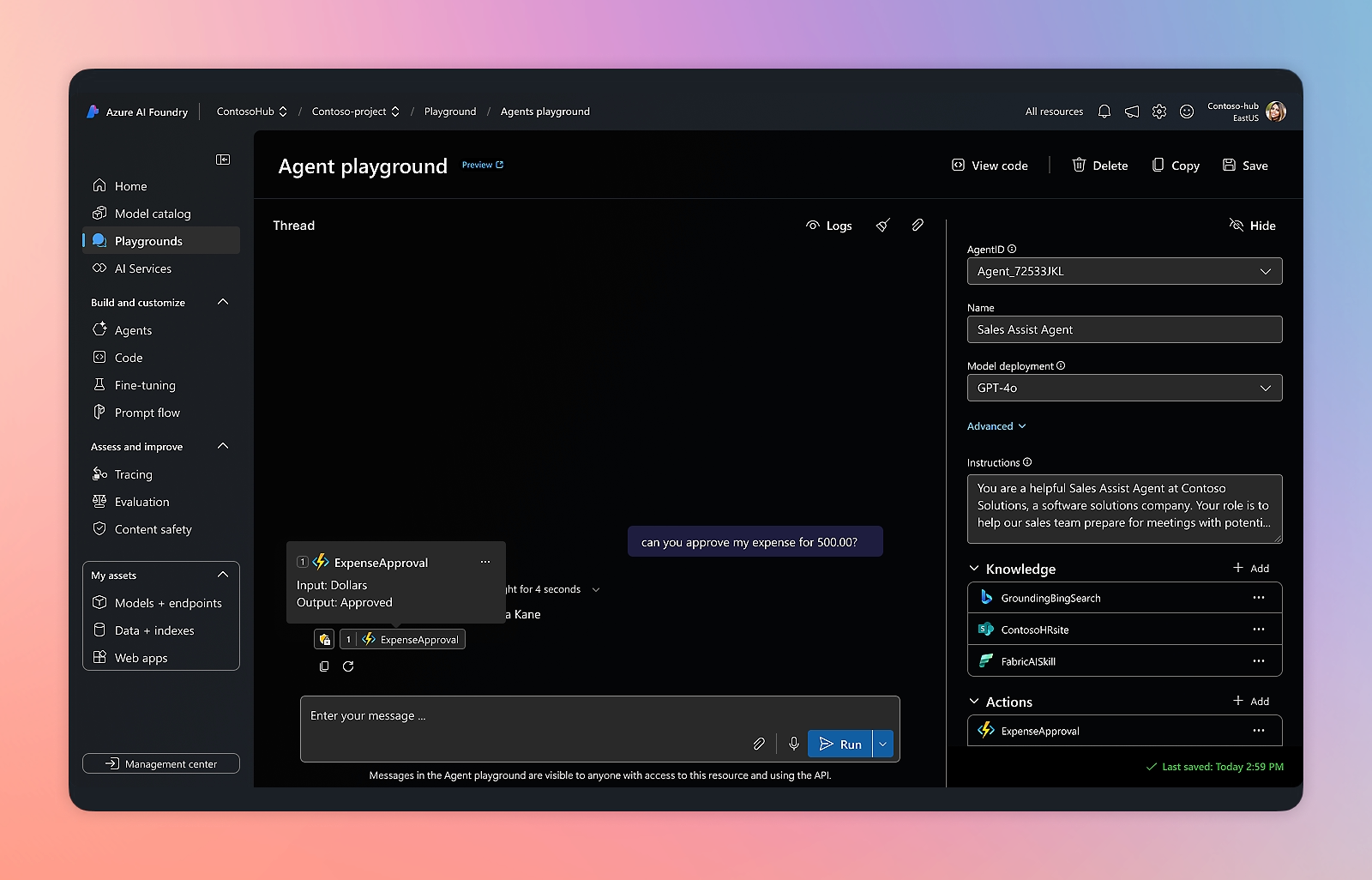
What sets this partnership apart is the integration of Levi’s workflows into a single conversational portal. Employees can ask questions about inventory, staffing, product details, logistics, and more — with answers instantly routed from the “superagent” to the right expert system, subagent, or data stack. Microsoft’s agentic AI within Teams centralizes these queries and makes collaboration simple, regardless of role or location.
Milestones to watch over the next year include phased subagent deployments, large-scale Azure cloud migrations, and tracking measurable improvements in employee productivity, time savings, and customer satisfaction. Levi Strauss is betting on these tech advances to cement its transformation into a fan-obsessed, data-driven, DTC-first retail leader.
Real-World Impact: Employee Experiences
Early reports from Levi’s headquarters and retail staff signal significant improvements:
-
The Surface Copilot+ PCs and Windows 11 OS have “led to significant improvements in speed, reliability and data handling,” said company representatives.
-
The Copilot key on the new keyboards is a particular favorite, letting users summon AI help instantly and freeing creative teams to focus on design and merchandising.
-
Developer teams debugging supply chain workflows say GitHub Copilot “takes a lot of the routine coding off their plate, letting them spend more time innovating.”
-
Remote stores onboarding new staff via Microsoft Intune report smooth rollouts with minimal IT overhead, even in international markets.
Why This Matters
For Microsoft, this partnership is about showcasing how its AI tools—Copilot, Teams, Azure AI—can create real, measurable business impact for global enterprises transforming their futures. For Levi Strauss, it’s about blending their 175-year-old heritage with future-facing technology, leveraging cloud-scale AI to power everything from internal collaboration to customer engagement.
As Keith Mercier, Microsoft’s VP for Worldwide Retail & Consumer Goods, put it in the announcement: “From unlocking scale to enabling creativity and innovation, we’re proud of how we’re partnering with Levi’s to weave AI into every experience for employees and fans.”
What’s Next for Levi Strauss and Microsoft

Industry experts expect to see measurable metrics (employee productivity lifts, sales growth, operational cost savings) as Levi Strauss rolls out Microsoft’s Copilot+ PCs, agentic AI, and Azure cloud solutions across its global footprint. The companies say the collaboration is designed to be modular, scalable, and ready to adapt to new retail and consumer challenges over the next five years.
The digital transformation at Levi Strauss is set to become a blueprint for retail modernization, with other brands likely to follow suit — especially as AI and cloud technology become increasingly critical in a rapidly evolving consumer landscape.
Discover more from Microsoft News Now
Subscribe to get the latest posts sent to your email.